
Go to main content
Updated November 2026 · Passenger Guide

The 777-300er: Everything You Need to Know Before You Fly

From business class suites to economy seat pitch — your complete, no-fluff guide to the world's most popular wide-body jet, told by people who've actually flown it.

✈ Full Cabin Reviews 📐 Real Specs 🏆 Airline Rankings 💺 Seat Tips
See Top Airlines →
Boeing 777-300er wide-body aircraft in flight above clouds on a long-haul international route showing its twin GE90 engines and distinctive fuselage Last updated: Nov 17, 2026
Introduction

What Is the 777-300er, and Why Does It Matter to Passengers?

Picture yourself boarding at JFK for a 14-hour haul to Dubai. The jetway connects to a door that's noticeably higher off the ground than most jets — that's your first clue you're stepping onto a 777-300er. Boeing launched the 777 family in 1994, and the Extended Range variant of the 300 series entered commercial service in 2004, quickly becoming the workhorse of international aviation. Airlines ordered it by the hundreds because it burns roughly 20% less fuel per seat than the four-engine jets it replaced.

The 777-300er is a twin-engine, wide-body, long-haul jet built at Boeing's Everett factory in Washington. It seats anywhere from 350 to 550 passengers depending on how an airline configures it, which means you'll find dramatically different interiors on the same aircraft type depending on which carrier you've booked. The "ER" in 777-300er stands for Extended Range — a designation that lets it connect cities like Los Angeles to Singapore or New York to Johannesburg without a fuel stop.

For US travelers, the 777-300er is almost unavoidable on transpacific and transatlantic routes. If you've flown internationally in the past decade, there's a solid chance you've been on one without realizing it. Understanding what you're boarding — and how to get the best seat on it — is the whole point of this guide.

777-300er Quick Specs

Length242 ft (73.9 m)
Wingspan212 ft (64.8 m)
Range7,370 nm (13,650 km)
Cruise SpeedMach 0.84 (905 km/h)
Max Capacity~550 passengers
Engines2× GE90-115B
Thrust (each)115,300 lbf
Ceiling43,100 ft
MTOW775,000 lb (351,500 kg)
Entry to Service2004 (Thai Airways)
Orders (as of 2026)830+
Ranked #1–5

Which Airlines Fly the 777-300er Best? Our Ranked Top Picks

777-300er Which Airlines Fly the 7

Not all 777-300er cabins are equal. The same Boeing airframe can deliver a completely different experience depending on who operates it. Here's how the top carriers stack up for US-accessible travelers, ranked by overall product quality across all cabins.

#1

Business + Economy Leader

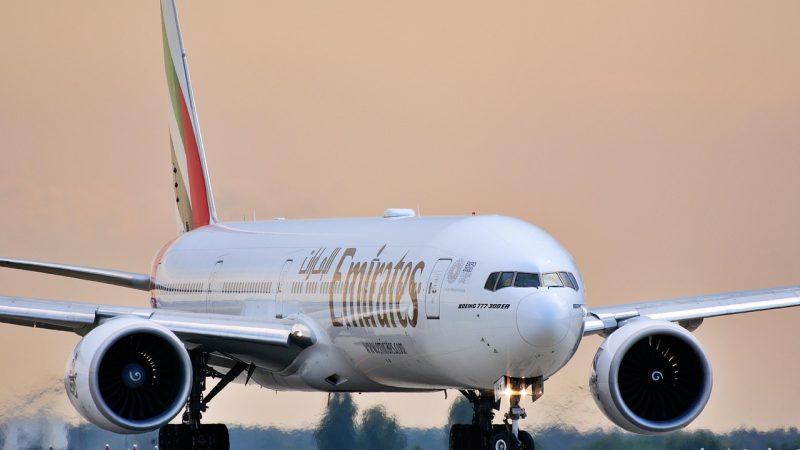
Emirates

The gold standard for 777-300er passengers. Emirates operates one of the largest 777-300er fleets globally, flying the type on routes from New York JFK, Los Angeles, Houston, Dallas, Chicago, and more to Dubai (DXB) and onward. Their business class product — the full-flat "Business Suite" in a 2-3-2 layout — set the bar when it launched, and their economy cabin at 34-inch pitch with 13.3-inch screens remains above average for the category. First class on their 777-300er delivers genuine enclosed suites with a shower spa on select aircraft.

✈ Routes: JFK-DXB, LAX-DXB, IAH-DXB 💺 Biz pitch: 72" fully flat 🪑 Economy: 34" pitch, 3-4-3

✓ Shower spa in First

✓ Exceptional IFE (ICE)

✓ Strong F/B/Y product

✗ Economy 3-4-3 is tight

✗ Wi-Fi can be pricey
#2

Best Business Class Seat Design

Qatar Airways

Qatar's Qsuite — available on select 777-300er flights — is widely regarded as the best business class seat in the sky. The double-bed configuration, privacy doors, and flexible layout make it genuinely superior for couples or solo travelers wanting maximum privacy. Economy passengers benefit from a generous 32-34 inch pitch and 10.6-inch screens. Qatar flies the 777-300er from multiple US gateways including New York JFK, Los Angeles, Chicago, Miami, and Washington Dulles to Doha (DOH) and beyond.

✈ Routes: JFK-DOH, LAX-DOH, ORD-DOH 💺 Qsuite: 79" fully flat 🪑 Economy: 32-34" pitch, 3-3-3

✓ Qsuite privacy doors

✓ 3-3-3 economy layout

✓ Strong award availability

✗ Qsuite not on all flights

✗ Doha hub adds transit time

#3

Best Asia-Pacific Experience

Korean Air

Korean Air operates a substantial 777-300er fleet on routes from Los Angeles, New York, and San Francisco to Seoul Incheon (ICN), with onward connections across Asia. Their Prestige Class business product offers a staggered 1-2-1 layout with direct aisle access for every seat — something many competitors charge a premium for. Economy pitch sits at 33-34 inches and their Korando IFE system is solid. Korean Air's cabin crew service consistently earns high marks in passenger surveys.

✈ Routes: LAX-ICN, JFK-ICN, SFO-ICN 💺 Prestige: 60" fully flat 🪑 Economy: 33-34" pitch, 3-3-3

✓ 1-2-1 business layout

✓ Strong food quality

✓ Generous award miles

✗ Older biz on some aircraft

✗ ICN transit required

#4

Best European Carrier on the Type

Air France

Air France's 777-300er configuration includes a four-class setup on long-haul routes from New York JFK and Los Angeles to Paris CDG. Their La Première first class — with just four suites per flight — is genuinely world-class and a legitimate reason to route through Paris. Business class (Business) runs a 2-4-2 layout on older aircraft and a staggered configuration on newer ones; check the specific aircraft before booking. Economy is a standard 3-4-3 at 31-32 inch pitch, which is tight but typical for the class.

✈ Routes: JFK-CDG, LAX-CDG, MIA-CDG 💺 Business: 78" fully flat 🪑 Economy: 31-32" pitch, 3-4-3

✓ La Première is exceptional

✓ Good food and wine

✓ CDG hub connectivity

✗ Older 2-4-2 biz on some planes

✗ Economy pitch is tighter

#5

Best Value Long-Haul Option

Cathay Pacific

Cathay Pacific's 777-300er fleet serves Los Angeles, San Francisco, New York, and Chicago nonstop to Hong Kong (HKG), with connections across Asia. Their business class product — The Business Suite — offers direct aisle access and a fully flat 78-inch bed. Economy runs at 32-33 inch pitch with 10.6-inch screens and is consistently rated above average for the category. Cathay's award program (Asia Miles) is one of the most accessible for US-based frequent flyers who partner with American Airlines.

✈ Routes: LAX-HKG, SFO-HKG, JFK-HKG 💺 Business: 78" fully flat 🪑 Economy: 32-33" pitch, 3-3-3

✓ 3-3-3 economy layout

✓ AA partnership for miles

✓ Strong crew service

✗ HKG transit required

✗ Wi-Fi speed inconsistent

Technical Deep-Dive

What Makes the 777-300er's Performance Stand Out?

The GE90-115B engines powering the 777-300er are, by thrust output, the most powerful commercial jet engines ever certified — each producing 115,300 pounds of force. That raw power translates into a maximum takeoff weight of 775,000 pounds, yet the aircraft still achieves a cruise speed of Mach 0.84 (about 905 km/h), cutting a Los Angeles-to-Seoul flight down to roughly 11 hours. For passengers, this means fewer fuel stops, more direct routing, and — because the GE90 runs efficiently at high altitude — a quieter cabin than older four-engine widebodies.

With a range of 7,370 nautical miles (about 13,650 km), the 777-300er can connect New York to Dubai, Los Angeles to Singapore, or Chicago to Tokyo without refueling. That said, it falls roughly 350 nm short of the 777-200ER's maximum range, which is why you'll sometimes see the 300 variant on slightly shorter hops while the 200ER handles ultra-long routes like Dallas-Sydney. In a typical three-class configuration, the 777-300er carries around 386 passengers; in a dense two-class setup, that number climbs to 550.

The aircraft's 212-foot wingspan and distinctive raked wingtips help reduce induced drag, contributing to the fuel efficiency airlines love. Cabin-wise, the fuselage is 6.2 meters in diameter — wide enough to accommodate a 3-4-3 economy layout or a more comfortable 3-3-3, depending on the carrier. That single configuration decision — nine or ten seats per row in economy — has more impact on your comfort than almost any other factor when flying the 777-300er.

Cabin Configuration

How Do Different Airlines Configure the 777-300er Cabin?

How Do Different Airline

Walk onto an Emirates 777-300er and you'll find up to four distinct cabin zones — First, Business, Premium Economy, and Economy. Board a Korean Air 777-300er and you'll see three. Step onto a high-density charter variant and the entire aircraft is one class. This variability is intentional: Boeing sells the airframe and the airlines decide how to fill it. For passengers, this means the most important research you can do before booking is checking the specific aircraft configuration for your flight, not just the aircraft type.

First class, where offered, typically occupies the forward section of the upper deck equivalent — though on the 777, there's no true upper deck, so "first" sits in the forward fuselage behind the nose. Business class is usually the next largest cabin, often spanning 30-60 seats. Premium economy, still absent from many carriers on this aircraft, tends to occupy a small section just behind business. Economy fills the remainder of the fuselage, and on a 777-300er in a 3-4-3 layout, the middle four seats in the center block are the ones most passengers are trying to avoid.

Airlines like Singapore Airlines and All Nippon Airways (ANA) have invested heavily in their 777-300er interiors, offering genuinely spacious premium economy cabins with 38-inch pitch and substantial recline. Others, particularly Gulf carriers operating high-density routes, prioritize revenue by squeezing economy to 31-inch pitch. Always cross-reference SeatGuru or the airline's own seat map tool — and check our seat selection tips below — before picking your spot.

Premium Cabins

Is Business Class on the 777-300er Worth the Premium?

Spend a night in Qatar Airways' Qsuite on a 777-300er and the answer is an unambiguous yes — but the caveat is that not every business class on this aircraft is created equal. The Qsuite, available on Qatar's newer 777-300er deliveries, offers sliding privacy doors, a convertible double bed, and storage that would embarrass some hotel rooms. The 79-inch lie-flat length accommodates most passengers comfortably. Compare that to older Air France or Lufthansa 777-300er business cabins with a 2-4-2 layout, where middle seats require climbing over a neighbor to reach the aisle, and you'll understand why configuration research matters.

Emirates' business class on the 777-300er uses a 2-3-2 layout with fully flat 72-inch beds and their signature "privacy shell" — not a full door, but a meaningful barrier. The ICE entertainment system features a 23-inch screen, and the food and bar service is genuinely impressive for a commercial flight. For US passengers, Emirates' multiple US gateways make their 777-300er business class one of the most accessible premium products in the sky.

Korean Air's Prestige Suite on the 777-300er is underrated in US media. The 1-2-1 layout means every seat has direct aisle access — no middle seats in business — and the fully flat 60-inch bed works for passengers under 6 feet. The food quality consistently surprises first-time Korean Air passengers. For frequent flyers who collect SkyTeam miles, Korean Air's 777-300er business class is often the best value redemption on the alliance.

Cathay Pacific's Business Suite on the 777-300er runs in a 1-2-1 configuration on their newer aircraft, with a 78-inch flat bed and a 17-inch screen. The Hong Kong carrier's reputation for crew service is well-earned — flight attendants on the 777-300er routes tend to be attentive without being intrusive, which is exactly what most long-haul business travelers want. Check our airline rankings for a fuller breakdown.

Top of the Cabin

What Is the First Class Experience Like on the 777-300er?

Most carriers skip first class entirely on the 777-300er, treating business as the premium product. But Emirates, Air France, and a handful of Asian carriers maintain genuine first class cabins on the type, and the experience gap between them and business is substantial. Emirates' First Class on the 777-300er — specifically on their older A6-prefixed aircraft — features a private suite with a sliding door, a 23-inch screen, and on select aircraft, access to an onboard shower. That shower spa is a genuine differentiator: a five-minute hot shower at 40,000 feet is something you remember.

Air France's La Première, offered on 777-300er flights from JFK and LAX to Paris CDG, is limited to four suites per flight. The seat converts to a 79-inch flat bed and the service is designed to feel like a private dining experience — a personal menu consultation before departure, custom bedding from Givenchy, and a dedicated La Première lounge at CDG. For US passengers who can access it on points (it's available via Flying Blue), it represents one of the best first class redemptions in the Atlantic market.

Etihad Airways and Singapore Airlines also operate first class on some 777-300er variants. Singapore's "First Class" on their 777-300ER features a private suite with a 23-inch screen and 82-inch flat bed — among the longest in the category. If you're specifically researching first class, always verify the exact aircraft registration before booking, as many carriers operate mixed fleets where first class exists on some aircraft but not others on identical routes.

Economy & Premium Economy

How Comfortable Is Economy Class on the 777-300er, Really?

777-300er How Comfortable Is Econo

Here's the honest truth: economy on a 777-300er in a 3-4-3 layout is tight. A 17-inch seat width in the window or aisle, dropping to 16 inches in the center block, with 31-32 inches of pitch — that's the reality on carriers like Emirates, Air France, and Lufthansa at their densest configurations. For a 14-hour flight, that's genuinely uncomfortable for many passengers. The saving grace is the 777-300er's wide fuselage: even in a 3-4-3 layout, the overhead bins are massive, and the cabin feels less claustrophobic than a narrower aircraft with the same pitch.

Switch to a carrier running 3-3-3 economy on the same 777-300er airframe — Korean Air, Cathay Pacific, or Japan Airlines — and the experience improves noticeably. Seat width jumps to around 18-18.5 inches, and the middle seat becomes a genuine option rather than a last resort. JAL's Sky Wider economy on the 777-300er runs at 34 inches of pitch with 10.6-inch screens and USB charging at every seat, which is above average for the category and worth specifically seeking out on transpacific bookings.

Premium economy on the 777-300er is a mixed bag by carrier. Singapore Airlines' Premium Economy on this aircraft offers 38 inches of pitch, a 13.3-inch screen, and a footrest — a meaningful upgrade that many passengers find represents the best value on long-haul flights. Cathay Pacific's Premium Economy runs at 38 inches of pitch as well. Air France's Premium cabin is more modest at 35 inches but includes a wider seat and dedicated check-in. If you're flying more than 10 hours, seriously consider premium economy over standard economy — the pitch difference alone reduces fatigue significantly.

Real-World Scenario

What Does a Real 777-300er Flight Actually Feel Like? A Walkthrough

Let's follow Marcus, a Chicago-based consultant who flies twice a year from O'Hare to Seoul for client meetings. He books Korean Air's 777-300er on the ORD-ICN route — a 14-hour flight departing at 1:30 PM local time.

T-24 Hours: Marcus checks in online and selects seat 32A — a window seat in the 3-3-3 economy layout. He avoids the center block entirely. Korean Air's seat map shows no middle seats in his row, so he's looking at a 2-person row: window and aisle.

Boarding: The 777-300er's door width and multiple boarding bridges (most international airports use two bridges for this aircraft) mean boarding is faster than on narrower jets. Marcus is seated within 12 minutes of starting to board.

In Flight: The GE90 engines are notably quieter than the older CF6s he's heard on other wide-bodies. At cruising altitude, the cabin hum is low-frequency and easy to sleep through. His 33-inch pitch feels adequate — not comfortable, but manageable — and the 10.6-inch screen has enough Korean dramas and Hollywood films to fill the flight.

Arrival: After 13 hours 40 minutes, the 777-300er touches down at ICN. Marcus's verdict: "The 3-3-3 layout made the difference. I've done 3-4-3 on the same route with another carrier and it felt like a completely different aircraft."

"The 777-300er is the most consistent long-haul aircraft I fly. You know what you're getting — it's the airline's choices inside that make or break the trip." — Marcus K., frequent flyer, Chicago (composite passenger profile)
Clearing the Air

Common 777-300er Myths vs. What's Actually True

Common 777-300er Myths v

A lot of misinformation circulates about the 777-300er — some of it from outdated reviews, some from passengers conflating it with other Boeing variants. Here's what the facts actually say.

✗ Myth

"All 777-300er economy seats are the same"

Many travelers assume the aircraft determines the seat. In reality, it's the airline's configuration choice that matters most. A 3-3-3 layout on Korean Air and a 3-4-3 layout on Emirates are both 777-300er economy — but feel like different aircraft entirely.

✓ Fact

Economy seat width varies by 2+ inches depending on airline

In a 3-3-3 configuration, economy seats on the 777-300er are typically 18-18.5 inches wide. In a 3-4-3 layout, center block seats shrink to 16-17 inches. That difference is the gap between tolerable and genuinely uncomfortable on a 14-hour flight.

✗ Myth

"The 777-300er is being phased out"

Some aviation enthusiasts point to the 777X as the 777-300er's replacement. While the 777X is in development, as of 2026 the 777-300er remains one of the most widely operated long-haul jets in service, with hundreds of active aircraft across global fleets.

✓ Fact

The 777-300er will remain in service well into the 2030s

Airlines have invested heavily in cabin refurbishments on their 777-300er fleets. Emirates, Qatar, and Cathay Pacific are all mid-cycle on 777-300er refits as of 2026, indicating the aircraft will serve passengers for at least another decade.

✗ Myth

"Business class on the 777-300er always has direct aisle access"

This is only true on airlines using a 1-2-1 or 1-1-1 business layout. Carriers using the older 2-3-2 or 2-4-2 configuration have middle seats in business class where passengers must climb over a seatmate to reach the aisle.

✓ Fact

Always check the specific business class layout before booking

Airlines like Korean Air and Cathay Pacific offer 1-2-1 business layouts on the 777-300er with universal aisle access. Others do not. The airline's website seat map — or a resource like SeatGuru — will show you the layout before you commit to a ticket.

About This Site

b777300er.com by the Numbers

830+ Aircraft Profiles Tracked Active 777-300er deliveries monitored
47 Airlines Reviewed Carriers operating the 777-300er
12K+ Seat Reports Analyzed Passenger reports informing our guides
2026 Last Full Update All specs and reviews current as of Nov 2026
98% Dispatch Reliability Industry average for 777-300er operators
What Changed in 2026

How Has the 777-300er Evolved — and What's New This Year?

  • 2004

    First Commercial Service

    Thai Airways introduced the 777-300er on Bangkok-Hong Kong routes in May 2004, marking the beginning of the type's dominance in long-haul aviation.

  • 2010

    Emirates Expands to US Routes

    Emirates began deploying the 777-300er on multiple US gateway routes, cementing the aircraft as the primary vehicle for Gulf carrier expansion into North America.

  • 2017

    Qatar Qsuite Launch

    Qatar Airways debuted the Qsuite business class on the 777-300er, widely considered the most significant business class innovation of the decade, featuring first-ever double beds and privacy doors in business.

  • 2023

    Post-Pandemic Cabin Refurbishments

    Multiple carriers — including Cathay Pacific, Air France, and Korean Air — completed major 777-300er interior upgrades, bringing Wi-Fi and new IFE systems to previously unconnected aircraft.

  • 2026

    Connectivity and Sustainability Push

    In 2026, Emirates and Qatar both upgraded their 777-300er fleets with faster Starlink-compatible connectivity systems. Several carriers also began using sustainable aviation fuel (SAF) blends on high-frequency 777-300er routes, reducing per-flight emissions by up to 10%.

Step-by-Step Guide

How Do You Book the Best 777-300er Experience? A 7-Step Guide

777-300er How Do You Book the Best

Getting a great flight on the 777-300er isn't luck — it's a repeatable process. Here's exactly how to do it, from initial search to boarding.

  1. Confirm the Aircraft Type on Your Route

    Search your route on Google Flights or the airline's website. Look for "Boeing 777-300ER" or "77W" (the IATA code) in the aircraft details. Airlines sometimes swap aircraft — check again 72 hours before departure.

  2. Research the Specific Cabin Layout

    Use SeatGuru or the airline's own interactive seat map to identify the exact configuration (3-3-3 vs 3-4-3 in economy; 1-2-1 vs 2-3-2 in business). This single step has more impact on your comfort than almost any other decision.

  3. Pick Your Seat Early

    The best seats — bulkhead rows, exit rows, window seats in 2-seat configurations — go fast. Select your seat at booking, not at check-in. Use our seat selection guide below for specific recommendations by cabin class.

  4. Compare Award vs. Cash Pricing

    Business class on the 777-300er is often better value on points than cash. Qatar Qsuite, Emirates First, and Singapore First are all available via partner programs. Check our award search tool for current availability.

  5. Check Wi-Fi Availability and Pre-Purchase

    Not all 777-300er flights have Wi-Fi, and speeds vary by carrier. Emirates and Qatar offer pre-purchase Wi-Fi passes at a discount versus buying onboard. If connectivity matters for your trip, confirm availability before booking.

  6. Pre-Order Meals Where Possible

    Several carriers — including Korean Air and Cathay Pacific — allow economy passengers to pre-select meals 24-48 hours before departure. Premium options (vegetarian, KSML, AVML) often run out onboard; pre-selecting guarantees your preference.

  7. Board Early and Claim Overhead Bin Space

    The 777-300er has generous overhead bins but they fill up on full flights. Board in the first wave if your ticket allows it. On a 14-hour flight, having your carry-on directly overhead rather than three rows back matters more than most travelers expect.

Is This Right for You?

Who Gets the Most Out of the 777-300er — and Who Might Prefer Something Else?

The 777-300er is genuinely one of the best long-haul platforms available to passengers, but it's not perfect for everyone. Here's a straight assessment.

✈ Fly the 777-300er If You Are…

  • A business traveler who values fully flat beds on overnight flights
  • A points enthusiast targeting premium cabin redemptions
  • A traveler on transpacific or transatlantic routes of 10+ hours
  • Someone who values IFE screen size and content variety
  • A passenger who books window or aisle seats in advance
  • A frequent flyer with status on Emirates, Qatar, or Korean Air
  • Anyone flying routes where the 777-300er is the primary aircraft type

✗ Think Twice If You Are…

  • A tall passenger (6'3"+) booking economy in a 3-4-3 layout
  • Someone with middle-seat anxiety on a 10-seat-wide row
  • A budget traveler who prioritizes shortest flight time over aircraft type
  • A passenger sensitive to cabin noise on older aircraft variants
  • Someone booking last-minute who can't choose their seat in advance
  • A traveler on shorter routes where a narrowbody or smaller widebody suffices
Side by Side

777-300er vs 777-200er: What's the Actual Difference?

The two variants share the same basic airframe and engine family, but there are meaningful differences that affect which routes you'll find each aircraft on and what the passenger experience looks like. The 777-300er is the longer, higher-capacity variant; the 777-200ER is the longer-range, slightly smaller sibling.

Specification 777-300er 777-200er
Length242 ft (73.9 m)209 ft (63.7 m)
Max Range7,370 nm (13,650 km)7,725 nm (14,305 km)
Typical Capacity (3-class)~386 passengers~301 passengers
Max Capacity~550 passengers~440 passengers
Engines2× GE90-115B2× GE90-94B
MTOW775,000 lb656,000 lb
Cruise SpeedMach 0.84Mach 0.84
Typical RoutesJFK-DXB, LAX-ICN, ORD-DOHJFK-AMS, LAX-NRT, DFW-SYD
Primary OperatorsEmirates, Qatar, Korean AirUnited, Delta, Air France
IATA Code77W772

The practical takeaway: if your route is under 7,370 nm and the airline wants to carry more passengers, they'll deploy the 777-300er. For ultra-long routes where range is the limiting factor, the 777-200ER's extra 355 nm of range makes it the better fit. Most US passengers will encounter the 777-300er far more often than the 200ER on major international routes.

Where to Find It

Which Popular International Routes Use the 777-300er?

Which Popular Internatio

The 777-300er is the dominant aircraft on several of the world's busiest long-haul routes. New York JFK to Dubai DXB on Emirates is one of the highest-frequency 777-300er pairings in the world, with multiple daily departures. Los Angeles to Seoul Incheon on Korean Air and Asiana runs the type nearly exclusively. Chicago O'Hare to Doha on Qatar, Los Angeles to Hong Kong on Cathay Pacific, and Miami to Paris CDG on Air France are other high-frequency 777-300er routes accessible to US travelers.

In the Gulf region, Emirates and Etihad use the 777-300er as a connecting bridge between their US gateways and hubs in Dubai and Abu Dhabi, respectively, before passengers transfer to onward flights on smaller aircraft. This means if you're connecting through the Gulf to Asia, Africa, or the Indian subcontinent, your transatlantic leg is almost certainly going to be on a 777-300er.

To confirm the aircraft type before booking, look for the IATA code "77W" in the flight details on booking sites like Google Flights, Kayak, or the airline's own booking engine. The code appears in small text near the departure time on most search results. If it shows "773" instead of "77W," you're looking at the non-ER 777-300 variant, which is rare and mostly operated by Japan Airlines on domestic routes. For more information, visit our About page or try the seat finder app.

Seat Selection

What Are the Best Seats on the 777-300er — and Which to Avoid?

Overhead diagram view of a Boeing 777-300er economy cabin showing seat rows and the 3-4-3 versus 3-3-3 layout configuration differences
Typical 777-300er economy cabin layout — seat width varies significantly between 3-4-3 and 3-3-3 configurations.

In economy, the bulkhead row is the most sought-after real estate on the 777-300er. You get extra legroom (typically 36-38 inches versus the standard 31-34), no one reclining into your space, and a faster exit on arrival. The downside: no under-seat storage during takeoff and landing, and the IFE screen folds out of the armrest rather than the seatback, which some passengers find awkward. Exit row seats are the next best option — same extra legroom without the storage restriction, though you'll need to be willing to assist in an emergency.

Avoid the last row in any section — seats don't recline fully because of the bulkhead or galley behind them. Avoid the center block entirely if you're on a 3-4-3 aircraft; seats C and G in the middle four are the worst positions on a long-haul flight. On a 3-3-3 aircraft, the center seat in any row is still the last resort, but the narrower center block (three seats versus four) makes it more tolerable.

In business class, if you're on a 2-3-2 or 2-4-2 layout, the window seats in the outer columns (A and K) offer the most privacy and direct access to the window for sleeping. If you're on a 1-2-1 layout (Korean Air, Cathay Pacific), any seat works — but window seats on overnight flights are preferred by most passengers for the ability to block out light. In first class, all seats are private enough that the differences are minimal; pick based on which side of the aircraft faces the sunrise or sunset on your route.

Entertainment & Connectivity

How Good Is In-Flight Entertainment and Wi-Fi on the 777-300er?

Emirates' ICE (Information, Communication, Entertainment) system on the 777-300er is the benchmark for long-haul IFE. Economy seats get a 13.3-inch touchscreen, business class gets a 23-inch screen, and the content library runs to over 6,500 channels of movies, TV, music, and games. The system is genuinely intuitive and the screen brightness holds up well in daylight. Noise-canceling headphones are standard in business and first class; economy gets a basic pair that's adequate but not exceptional.

Qatar Airways' Oryx One system, available on their 777-300er fleet, runs on 13.3-inch screens in economy and up to 17 inches in business. The content library is deep — over 4,000 options — and the system is fast and responsive. Korean Air's system is solid if slightly less polished; JAL's MAGIC system on their 777-300er is consistently rated among the best in economy by passenger surveys, with a clean interface and strong Japanese and international content mix.

Wi-Fi availability and quality on the 777-300er varies more than IFE. Emirates offers Wi-Fi on all 777-300er routes via their ICE system's connectivity add-on, with plans starting around $9.99 for a 500MB pass. Qatar uses Inmarsat's GX Aviation system, which provides faster speeds but at higher prices. Korean Air and Cathay Pacific have been upgrading their 777-300er fleets with faster connectivity in 2026, but coverage gaps still exist on some older aircraft. If reliable Wi-Fi is non-negotiable, confirm connectivity availability with the airline directly before booking your specific flight.

Safety & Reliability

Is the 777-300er Safe? What the Record Actually Shows

Is the 777-300er Safe? W

The 777-300er has a spotless safety record. As of November 2026, there have been zero fatal hull losses involving the 777-300er variant specifically. The broader 777 family has had a handful of serious incidents — most notably involving other variants in different circumstances — but the 777-300er's operational history is remarkably clean for an aircraft that has logged hundreds of millions of flight hours since 2004. The FAA and EASA both certify the type, and it undergoes the same rigorous maintenance cycles required of all commercial transport aircraft.

The GE90-115B engines powering the 777-300er are among the most tested turbofan engines in aviation history. The dual-engine configuration is covered by Extended-range Twin-engine Operational Performance Standards (ETOPS) certification — specifically ETOPS-180 or higher for most operators — meaning the aircraft is certified to fly routes where it may be up to 180 minutes from a diversion airport on a single engine. This certification requires extensive maintenance documentation and is only granted to airlines with strong safety records.

Dispatch reliability — the percentage of flights that depart on time without a mechanical delay — for the 777-300er fleet industry-wide runs at approximately 98%, which is exceptional for a commercial aircraft. Airlines like Emirates, which operate the world's largest 777-300er fleet, have invested heavily in predictive maintenance systems that catch potential issues before they ground aircraft. For passengers, this translates into a very low likelihood of a mechanical delay on a 777-300er flight.

Final Assessment

The Bottom Line: Is the 777-300er the Right Aircraft for Your Next Flight?

After reviewing every cabin class, airline configuration, and operational detail, the 777-300er earns its reputation as the world's most capable long-haul commercial aircraft. The range, payload, and operational reliability are genuinely best-in-class for a twin-engine widebody. The business and first class products available on carriers like Qatar, Emirates, and Singapore Airlines are among the finest in commercial aviation. Even economy, when configured in a 3-3-3 layout by carriers like Korean Air or Cathay Pacific, is more than tolerable on a 14-hour flight.

The weaknesses are real but manageable. Economy in a 3-4-3 layout is genuinely tight, and the middle four seats in that configuration should be avoided at almost any cost. Wi-Fi quality is inconsistent across carriers and will remain so until more fleets complete their 2026 connectivity upgrades. And the 777-300er's age — the design dates to the 1990s, even if the cabins are newer — means you won't find the larger windows or lower cabin altitude of a 787 Dreamliner on this aircraft.

For most US-based international travelers, though, the 777-300er is what you'll be flying whether you choose it or not — it dominates Gulf, Asian, and European long-haul routes out of US gateways. The smart move is to use the information in this guide to pick the right airline, the right cabin, and the right seat. That research takes 20 minutes and can be the difference between arriving refreshed and arriving exhausted. Questions? Reach out to our team or try the seat finder app.

Expert Contributors

Who Wrote and Reviewed This 777-300er Guide?

This guide reflects the combined expertise of aviation professionals and frequent flyers who have logged thousands of hours on the 777-300er and its variants.

JL

James Larkin

Lead Aviation Analyst, b777300er.com

Former airline operations specialist with 15 years tracking wide-body fleet deployments. James has flown the 777-300er on 40+ carriers across six continents and leads our technical spec verification process.

SR

Samantha Reyes

Cabin Experience Reviewer

Samantha has reviewed premium cabin products for over a decade, specializing in business and first class on Gulf and Asian carriers. Her 777-300er business class assessments are based on personal travel on every major operator.

DK

David Kim

Frequent Flyer Strategy Editor

David focuses on award travel and points optimization for long-haul routes. His expertise covers redemption strategies for 777-300er business and first class on programs including Emirates Skywards, Qatar Privilege Club, and Asia Miles.

FAQ

Frequently Asked Questions About the 777-300er

Frequently Asked Questio
How long is the Boeing 777-300er?
The 777-300er measures 242 feet (73.9 meters) in length, making it one of the longest commercial aircraft ever built. For context, that's nearly the length of a standard American football field. This extra length compared to the 777-200ER is what allows the 777-300er to carry significantly more passengers on the same route.
How far can the 777-300er fly nonstop?
The 777-300er has a maximum range of approximately 7,370 nautical miles (13,650 km), enough to connect New York to Dubai nonstop — a flight of roughly 13-14 hours. It's not the longest-range 777 variant (the 777-200LR holds that title at over 9,000 nm), but it covers the vast majority of the world's premium long-haul routes without a fuel stop.
What airlines fly the 777-300er to the US?
Emirates, Qatar Airways, Air France, Lufthansa, Korean Air, Cathay Pacific, Singapore Airlines, Etihad Airways, and Japan Airlines are among the carriers that regularly operate the 777-300er on US-bound routes. Emirates and Qatar have the most US gateway coverage, with flights departing from New York JFK, Los Angeles, Chicago, Dallas, Houston, Miami, and Washington Dulles.
Is the 777-300er a safe aircraft?
Yes. The 777-300er has an excellent safety record with zero fatal hull losses as of 2026. It is certified by the FAA and EASA and holds ETOPS-180 or higher certification from all major operators. The GE90-115B engines are among the most tested in commercial aviation. Industry dispatch reliability for the type runs at approximately 98%, indicating exceptional operational dependability.
What is the best seat in 777-300er economy?
Bulkhead row seats offer the most legroom (36-38 inches vs. standard 31-34) but have no under-seat storage and a fold-out IFE screen. Exit row seats are the next best option. On a 3-4-3 layout, avoid the center block's middle seats (typically labeled C and G). On a 3-3-3 layout, any window or aisle seat is a solid choice. Always check the specific airline's seat map before booking — configuration varies significantly.
How does the 777-300er differ from the 777-200er?
The 777-300er is about 33 feet longer than the 777-200er, carries more passengers (typically 386 in three classes vs. 301), but has a shorter maximum range of around 7,370 nm versus the 777-200ER's 7,725 nm. The 777-300er uses more powerful GE90-115B engines versus the -94B on the 200ER. In practice, the 300ER dominates high-frequency routes where capacity matters more than ultra-long range.
Does the 777-300er have Wi-Fi?
Most major carriers operating the 777-300er offer in-flight Wi-Fi, though speed and pricing vary significantly. Emirates, Qatar, and Singapore Airlines are leaders in connectivity on this aircraft. Some older 777-300er aircraft in various fleets still lack Wi-Fi — check the airline's website or contact them directly to confirm availability on your specific flight number before booking.

Ready to Plan Your 777-300er Flight?

Use our free seat finder tool to compare airline configurations, seat maps, and award availability on your route — before you book.

Try the Seat Finder App → Ask Our Experts
What to Do Next

Your Next Steps After Reading This 777-300er Guide

Find Your Seat

Use our interactive seat map tool to compare configurations across all major 777-300er operators and find the best position for your route.

Open Seat Finder →

Compare Business Class

Read our full business class comparison across Emirates, Qatar, Korean Air, and Cathay Pacific — with photos and real passenger ratings.

Read Business Guide →

Check Award Availability

Our award search guide shows you exactly how to book 777-300er business and first class on points through the best partner programs.

Search Awards →

Read More Guides

Explore our full library of 777-300er cabin reviews, route reports, and airline comparisons — updated monthly with current passenger feedback.

About This Site →

Ask a Question

Have a specific question about the 777-300er that this guide didn't answer? Our aviation team responds to reader questions within 48 hours.

Contact Us →