777-300er · About
We cover one aircraft obsessively — the Boeing 777-300er. Seat maps, cabin reviews, specs, and route data, all written by people who actually fly this plane.

Talk to the Team
Editorial & Content
Questions about a seat map, a cabin review, or a spec discrepancy? We want to hear them — accuracy matters more to us than anything.
contact@b777300er.comBased In
b777300er.comNew York, NY, USA
contact@b777300er.com
Responses typically within 2 business days.
Reader Reports
Flew a 777-300er recently? Your seat number, cabin class, and honest notes help keep our data current. Send them to us — we verify every submission.
Submit a ReportBuilt Around One Aircraft
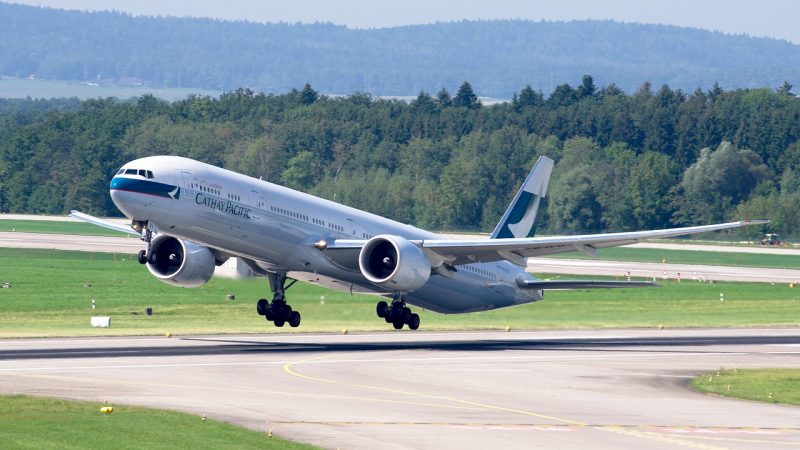
The first time you board a 777-300er and walk that 209-foot main deck from door 1 to door 5, you understand why it earned the nickname "Triple Seven." It is not just big — it is systematically engineered to carry more passengers farther than anything else in its class, and every airline configures it differently. That variation is exactly the problem we set out to solve.
b777300er.com launched in 2026 with a straightforward premise: one airplane deserves one dedicated resource. Not a general aviation wiki, not a booking aggregator, not a PR platform for airlines — just a rigorous, continuously updated guide to the 777-300er in every configuration it flies today.
Our contributors have flown the 777-300er in Business, Premium Economy, and Economy across more than a dozen carriers. When Emirates reconfigures a cabin or Qatar adds a new IFE system, we notice because we are already tracking it. The seat-pitch numbers and IFE notes you find here come from people who measured them personally or cross-referenced multiple verified sources — not from airline press kits.
We stay deliberately narrow. Covering every Boeing model would mean covering none of them well. The 777-300er is complex enough — with sub-variants, retrofit programs, and carrier-specific fitments — to justify that focus entirely.
No airline pays to influence our ratings. Period.
We name seat rows, not just "Business Class."
Outdated data misleads passengers. We update continuously.
Every affiliate link is labeled. No hidden deals.

Frequently Asked Questions
Real questions from readers about how b777300er.com works, who writes the content, and what makes the 777-300er different from other 777 variants.

What is b777300er.com and who writes the content?
b777300er.com is an independent passenger guide focused exclusively on the Boeing 777-300er. Every article is written by aviation enthusiasts and frequent flyers who have logged real hours aboard this aircraft across multiple airlines and cabin classes — not press-release rewrites. We do not syndicate wire copy or auto-generate seat descriptions. If a contributor hasn't personally verified something, we say so and cite our source.
Does b777300er.com accept paid placements or sponsored reviews?
No. We do not accept payment to alter editorial opinions. If a piece of content is supported by an affiliate relationship (such as booking links), we say so clearly. Airline seat ratings and route assessments are based entirely on independent research and passenger data. An airline's advertising budget has zero effect on its seat pitch score.
How often is the 777-300er information updated?
We review and refresh core content at least quarterly. When an airline reconfigures its 777-300er cabin — new Business Class seats, updated IFE, revised Economy pitch — we update the relevant seat maps and guides within a few weeks of confirmed reports. Major changes (like a full cabin retrofit) get a dedicated article. Our "last verified" dates are visible on every seat guide page so you can judge freshness yourself.
Which airlines' 777-300er configurations does the site cover?
We cover every major operator of the 777-300er including Emirates, Qatar Airways, Air France, Cathay Pacific, Singapore Airlines, Korean Air, Thai Airways, and more. Where a carrier operates multiple sub-variants or retrofitted cabins — for example, Emirates' two distinct Business Class configurations — we document each configuration separately rather than averaging them into a single misleading rating.
Can I submit a seat review or passenger report?
Yes — reader reports are genuinely useful. Send your flight details, seat number, cabin class, and honest notes to contact@b777300er.com. We verify submissions against known configurations before publishing anything. If your report reveals a configuration change we haven't documented yet, we'll reach out with follow-up questions and credit you in the updated guide.
Is there a difference between the 777-300er and the 777-300?
Yes, and it matters if you are choosing a flight. The 777-300er (Extended Range) is powered by GE90-115B engines — the most powerful commercial jet engines ever built — and features raked wingtips, giving it roughly 30% better fuel efficiency and considerably longer range than the original 777-300. Maximum range on the 777-300er is approximately 7,370 nautical miles versus the 777-300's 5,955 nm. Most current long-haul 777 routes use the 777-300er variant; the original 777-300 is now rare in commercial service.
How We Work

Our editorial process is designed around one question: would a passenger trust this information enough to choose a seat based on it?
First-Hand Verification
Seat guides start with a contributor who has actually sat in the cabin. We cross-reference their notes against seatguru data, airline SeatMaps, and at least one other independent passenger source before publishing. If the three don't align, we investigate rather than average.
Transparent Sourcing
Where we cite a specification — engine thrust rating, MTOW, cabin width — we link to or name the primary source. Boeing's published Aircraft Characteristics document is our baseline for structural specs. Airline-specific cabin data comes from the carrier's own SeatMaps documentation plus verification.
No Undisclosed Affiliates
Some outbound links on this site earn a referral fee. Every one of them is marked. We never recommend a booking platform because it pays better — only because it genuinely works for 777-300er routes. Our seat ratings exist entirely outside any commercial relationship.
Correction Policy
Mistakes happen. When a reader catches one, we fix it publicly and note the correction at the bottom of the article with the date. We don't quietly edit and pretend it never happened. This is basic journalistic hygiene that too many aviation sites skip.
Update Cadence
Airlines reconfigure cabins regularly — sometimes mid-fleet. We run a quarterly audit of every carrier guide on the site. High-traffic routes (Dubai–JFK, London–Singapore, etc.) get reviewed more frequently because outdated seat data on those routes causes real passenger frustration.
No AI-Generated Seat Data
We use editorial tools like spell-check and grammar review. We do not auto-generate seat descriptions, pitch measurements, or IFE assessments. Every data point in a seat guide is written by a human who has verified it against a real source — not synthesized from training data.
What Makes the 777-300er Different

Book a seat on a long-haul 777 and the first thing worth knowing is which variant you're actually on. Seat 42A on a 777-300er and seat 42A on a 777-200ER are different experiences — different fuselage length, different cabin pressure management, sometimes entirely different IFE generations. The Boeing 777-300er is specifically the GE90-115B-powered extended-range derivative of the 777-300, certified in 2003, and it became the backbone of intercontinental widebody fleets for a reason.
The GE90-115B engine is worth a moment of attention. At 115,300 lbf thrust, it held the record for the most powerful jet engine in service for years. That power is what allows the 777-300er to carry up to 396 passengers (in a two-class configuration) across 7,370 nautical miles — covering routes like Sydney to Dallas or Johannesburg to Atlanta nonstop. The raked wingtips, a distinctive visual marker, reduce induced drag and improve fuel burn by several percentage points compared to the original 777-300's flat-ended wings.
From a passenger perspective, the 777-300er's fuselage cross-section is where the experience diverges most sharply from other widebodies. The cabin is 19 feet 3 inches wide internally — wider than an A380's main deck, though narrower than the A380's upper deck. In Economy, that width typically yields a 3-4-3 ten-abreast configuration. Most airlines adopted this layout after 2012 to maximize capacity, which compressed seat width to around 17 inches. A handful of carriers — notably Cathay Pacific and Singapore Airlines — still operate 9-abreast in Economy at 18.5 inches, a meaningful comfort difference on a 14-hour flight.
Business Class is where the 777-300er really shows its range. The same airframe hosts everything from Qatar's Qsuite double-bed configuration (arguably the best Business product flying today) to much older, angle-flat products on carriers that haven't retrofitted since the mid-2010s. Knowing which configuration your specific aircraft carries — not just which airline you're flying — is the practical value that b777300er.com exists to provide.
One technical detail passengers rarely consider: the 777-300er uses fly-by-wire flight controls despite Boeing marketing the 777 family as "conventional" compared to Airbus. The system is less envelope-limited than Airbus's implementation, which pilots tend to prefer, but for passengers the more relevant fact is that the resulting flight dynamics make for a genuinely smooth ride even in turbulence. The aircraft's size and wing loading dampen the short-period oscillations that make smaller jets uncomfortable in rough air.

Four Things We Will Not Compromise On

Accuracy Over Speed
We'd rather publish a seat guide two weeks late than publish wrong seat-pitch numbers that send someone to the middle of a 3-4-3 Economy row expecting 18 inches of space.
Specificity Over Generality
Saying "Business Class is good" helps no one. We name the seat model, the lie-flat angle, the aisle-access configuration, and the IFE system generation.
Reader Trust Over Revenue
A site that sells its ratings is not a guide — it's an ad. We will keep affiliate relationships subordinate to editorial integrity, always. If that means less revenue, so be it.
Currency Over Evergreen
Aviation changes fast. Cabin retrofits, IFE upgrades, new routes — content that was accurate in 2024 may be wrong in 2026. We treat publishing as a continuous process, not a one-time event.
Start With the Best Seats on the 777-300er
Our seat guides break down every carrier configuration — row by row, cabin by cabin. If you're flying a 777-300er soon, this is where to start.